Ever Wonder Why That Pad Thai Hits Different on the Gulf Coast?
Picture this: You’re in Pensacola, the sun dipping low over the Gulf, and you slide into a booth at a little Thai spot tucked away from the tourist traps. The air smells of lemongrass and chilies, and suddenly, that plate of pad thai isn’t just food—it’s a story. A bridge between worlds. If you’re a Thai restaurant owner in the Panhandle or just a fan chasing authentic flavors from Pace to Panama City, you’ve probably felt it. Thai food along the Gulf Coast isn’t mere comfort eating. It’s cultural glue, holding onto heritage while soaking up the salty sea air.
Let’s get real. In a place like Fort Walton Beach, where Southern drawls meet fresh seafood, Thai cuisine stands out. But why? It’s not just the spicy-sour kick. This food carries centuries of history, blending ancient influences with modern immigrant tales. And for owners hustling in Milton or Panama City, understanding this can turn your menu into a magnet for locals who crave more than a quick bite.
Roots That Run Deeper Than Your Average Curry
Thai food didn’t pop up overnight. Think back to the 15th century. Khmer cooks from Cambodia slipped into Ayutthaya—old Siam’s heart—and brought curries that stuck around. Fast forward, and fish sauce? That’s got ties to ancient China, the Zhou dynasty no less. Then the Portuguese showed up in the 1600s, tossing chilies into the mix. Mix that with lime, and boom—you’ve got Thailand’s famous sweet-salty-savory-sour-spicy dance.
But it’s not all one-note. Indian traders, riding the waves of Buddhism, added coconut milk, turmeric, and those warm spices in Massaman curry. Chinese folks during the Tang and Ming eras flipped the script on cooking—stir-fries, noodles, soy sauce, ginger. What was once slow-stewed grub turned into sizzling pad thai and fried rice. Down south in Thailand, near the sea like our Gulf Coast, Malay flavors sneak in: satay skewers, roti flatbreads, even khao mok rice dishes. It’s a mash-up that feels familiar here, with our own seafood twists.
Here’s the practical bit for you restaurateurs. Lean into these stories on your menu descriptions. Customers in the Florida Panhandle love a tale. Mention how your green curry nods to those Indian roots, or how your stir-fries echo Chinese ingenuity. It makes the dish feel alive, not just listed.
From Thailand’s Shores to the Gulf of Mexico
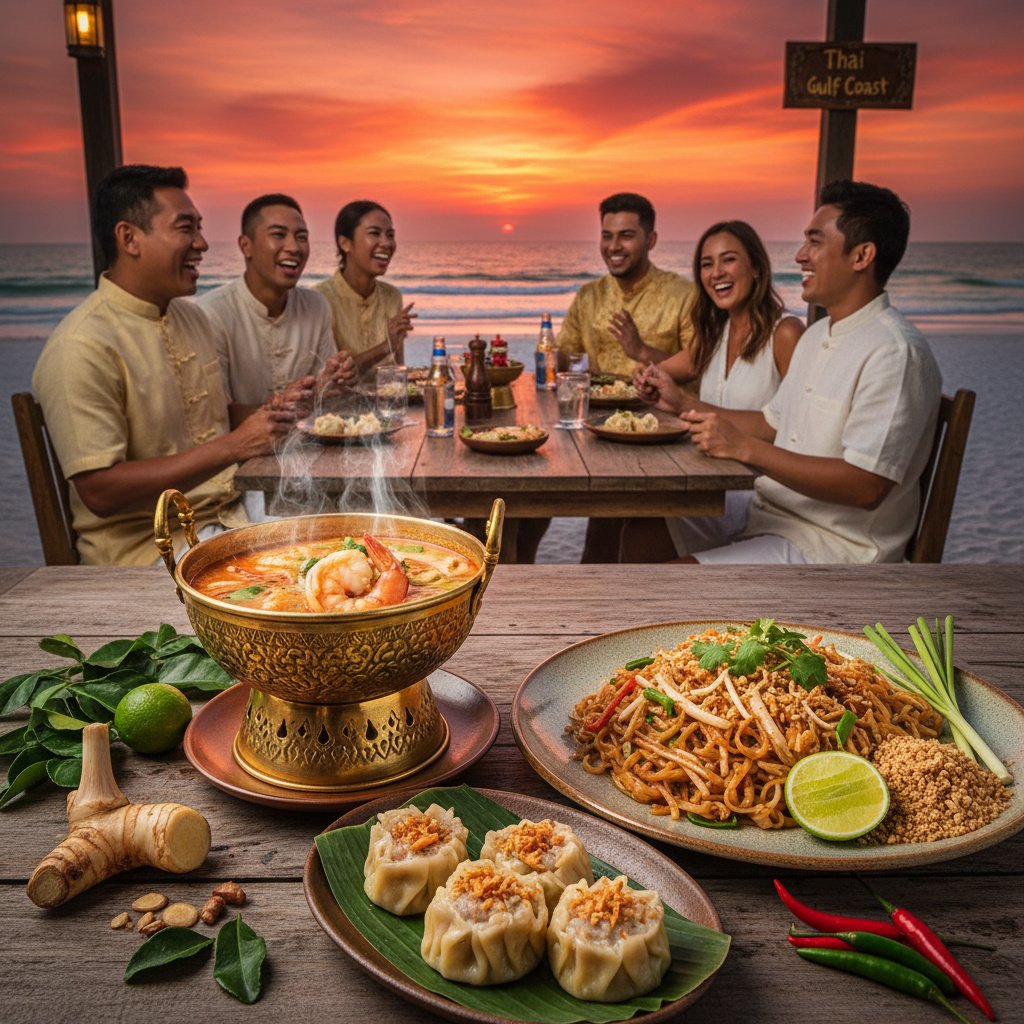
Southern Thai cuisine? It’s all about the coast. Think Gulf of Thailand versus the wild Andaman Sea. Seafood reigns—shrimp, fish, crab—paired with bold herbs. That’s why tom yum kung fits right in along our beaches. Just last year, on December 3, 2024, UNESCO etched tom yum kung into its Intangible Cultural Heritage list. The first Thai dish to get that nod. Born from central Thai riversides, it uses local gems like lemongrass, galangal, kaffir lime leaves, and holy basil. This isn’t just soup; it’s harmony with nature, family bonding, passing down recipes grandma to grandkid.
For Gulf Coast Thai dining experiences, this is gold. Imagine serving tom yum with fresh Panhandle shrimp. Your patrons in Pace or Fort Walton Beach aren’t just eating—they’re tasting philosophy. Thai food promotes balance, that five-flavor harmony. Skeptical? Try it next time you’re plating up. Does it bring folks back? You bet.
Owners, here’s a tip: Host a night highlighting tom yum’s story. Tie in the UNESCO bit. It elevates your spot from casual eatery to cultural hub. Fans will share pics on social, drawing in more from Pensacola to Panama City.
How Thai Food Landed in America—and Thrived on the Gulf Coast
Jump to the U.S. Thai food’s big break? The Vietnam War era. U.S.-Thailand alliances opened doors. In the 1960s and ’70s, cultural swaps brought Thai eats stateside before the big immigration waves. Thai students hit Los Angeles, fired up home-cooked meals to fight homesickness—and fed locals too. By 1972, the Bangkok Market in LA stocked real deal ingredients. No more subbing Chinese stuff for pad thai or green curry.
From there, it spread like wildfire. California, Illinois, Michigan, Texas, D.C.—and yeah, Florida. Take kanom jeeb, those steamed dumplings. In D.C., Yupin Laopanit’s Rockville joint made them a hit. Her family recipes trickled down, influencing Panhandle spots. It’s immigrant networks at work, preserving culture one bite at a time.
In our neck of the woods, it’s the same vibe. Authentic Thai restaurants from Pensacola to Panama City blend these histories with local flair. No fancy chef school needed—just family know-how. Adapt to American tastes? Sure, a tad less heat maybe. But keep the soul. Pad thai, invented mid-20th century to unify folks back home, does the same here. It’s comfort, resilience, fusion.
Practical advice: Source ingredients smartly. Hit up markets echoing that 1972 Bangkok one. Train staff on these backstories. It builds loyalty. Ever notice how a shared tale over kanom jeeb makes strangers into regulars?
The Southern Thai Twist That Echoes Our Gulf Coast Life
Southern Thailand’s food mirrors the Panhandle’s rhythm. Maritime roots mean bold, fresh, seafood-forward eats. Satay with peanut sauce, roti with curry—it’s all there. Unlike northern Thai’s milder herbs or central’s palace refinements, southern style packs punch. Loanwords from Malay pop up in names and flavors.
Along the Gulf Coast, this resonates. Your tom yum or seafood curries? They evoke Thailand’s southern coasts. For restaurant owners, it’s a chance to shine. Highlight how your menu fuses Gulf shrimp with southern Thai spice. Fans in Milton dig that local-global mash. It’s not gimmicky; it’s authentic evolution.
Light-hearted aside: Ever had a dish so balanced you forget the world’s chaos? That’s Thai magic. But don’t overhype—keep it real. Skeptics might roll eyes at “cultural significance,” but one taste, and they’re hooked.
Building Community, One Dish at a Time
Thai food’s cultural significance in the Florida Panhandle? It’s community glue. For immigrants, it’s home in a bowl. Kanom jeeb links generations; pad thai unites tables. Tom yum? Pure nature’s gift, now UNESCO-protected.
In places like Fort Walton Beach, these meals foster bonds. Restaurant owners without big budgets can leverage this. Share migration stories—resilience from LA pioneers to your own journey. The Thai government’s 2000s push trained chefs worldwide, standardizing flavors for tourism. Borrow that: Elevate your Gulf Coast Thai dining experience with storytelling events.
Audience takeaway: If you’re a fan, seek spots preserving this heritage. Ask owners about recipes. For owners, differentiate with narratives. Turn meals into migrations of flavor. It’s what makes Thai food Gulf Coast more than just a meal—it’s a vibe.
Quick story: I chatted with a Panama City owner once. Her grandma’s kanom jeeb recipe? Straight from Thailand’s south. She pairs it with local crab now. Customers linger, swapping tales. Business boomed. See? Practical wins.
Preserving Heritage in a Fast-Food World
Amid chains and trends, authentic Thai restaurants Pensacola to Panama City hold the line. Thai cuisine history Florida Gulf Coast weaves ancient trades with war-era swaps and immigrant grit. It’s practical preservation—familial, adaptable.
Owners, flag your authenticity. No shortcuts on herbs or techniques. Fans, support these spots. It’s cultural exchange in action. Harmony on the plate, harmony at the table.
In the end, Thai food Gulf Coast cultural significance Thai food Florida Panhandle? It’s resilience wrapped in rice noodles. More than sustenance—it’s story, shared across seas and shores.
Book a 15 minute discovery call to find out more today at https://digifidelis.com/calendar/

0 Comments